

You published a book, or you’re about to, and you’ve already spotted the catch. Amazon hands you a royalty line and keeps everything else. No names. No emails. No way to tell the person who just bought your book that you wrote another one.
If you want to build an email list with a nonfiction book, that’s the wall. The reader showed up, paid, and left, and they never became yours. Royalties alone tend to be a trickle, and a trickle doesn’t compound.
Maybe you’re working a full-time job and building something on the side. Maybe you have a small email list, or none at all. Maybe you’ve read that “a book builds authority,” then watched yours sit in the Kindle store, collecting nothing.
This post covers the approach that fixes that. By the end you’ll know how to choose a book topic from real reader pain instead of a hunch, why a companion bonus is the bridge between an Amazon purchase and your own list, and what a 30-day launch looks like when each book is built to feed the next one.
Why Building a List With a Book Is Harder Than It Should Be
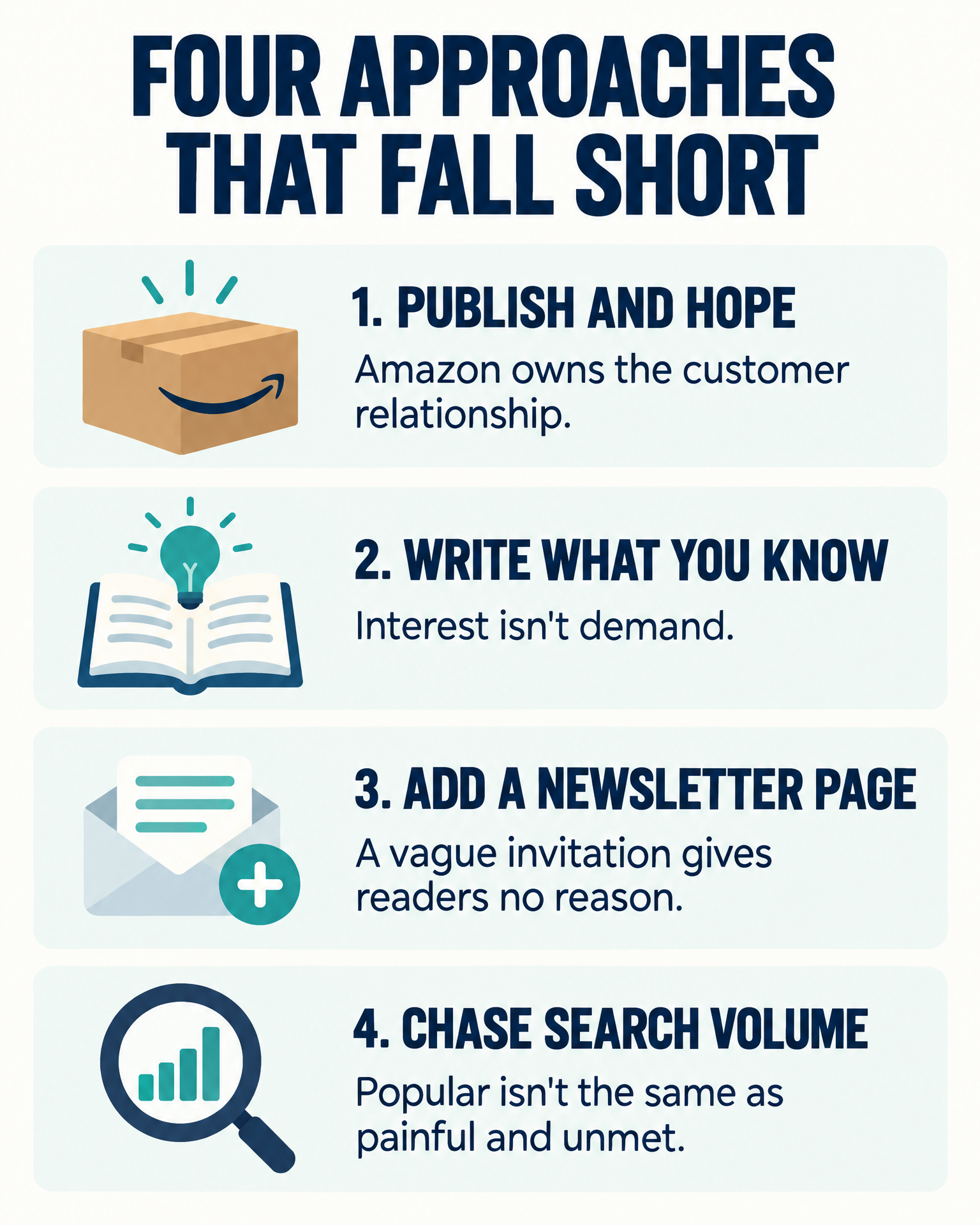
Most people try one of four things, and each one falls short in a predictable way.
Publish and hope. You write the book, upload it to Kindle Direct Publishing, and wait. Amazon owns the customer relationship, so even a book that sells leaves you with royalties and no audience.
Write what you know. Picking a topic because you’re interested in it feels natural. But interest isn’t demand. You can finish a full manuscript before learning that few people search for the problem it solves.
Add a “join my newsletter” page at the back. Readers have no reason to do it. A vague invitation to subscribe isn’t a reason to leave the book and visit a signup page.
Chase search volume alone. A keyword tool shows you what’s popular, not what’s painful or unmet. High-volume topics are often crowded with strong books already.
The common thread: the topic is chosen first, the list is an afterthought, and the two never connect.
The Key Insight: Start With the Pain Gap, Not the Topic
What is a Pain Gap in nonfiction publishing?
A Pain Gap is a painful, unmet problem that people are already searching for, where the existing books don’t give them a satisfying answer. It’s the space between how badly readers want a solution and how well the current options deliver one.
Starting there changes the whole project. Instead of writing a book and hunting for readers, you find readers who are already looking, then write the book that answers them.
That’s the foundation of The Book Snowball, a nine-module course built around the Pain Gap system. The method has two halves.
Half one: choose the book by evidence. You pick one seed keyword and mine it into a bank of subtopics, written in the actual language readers use. You turn those pains into book ideas, score them, rank them, and commit to a single winner.
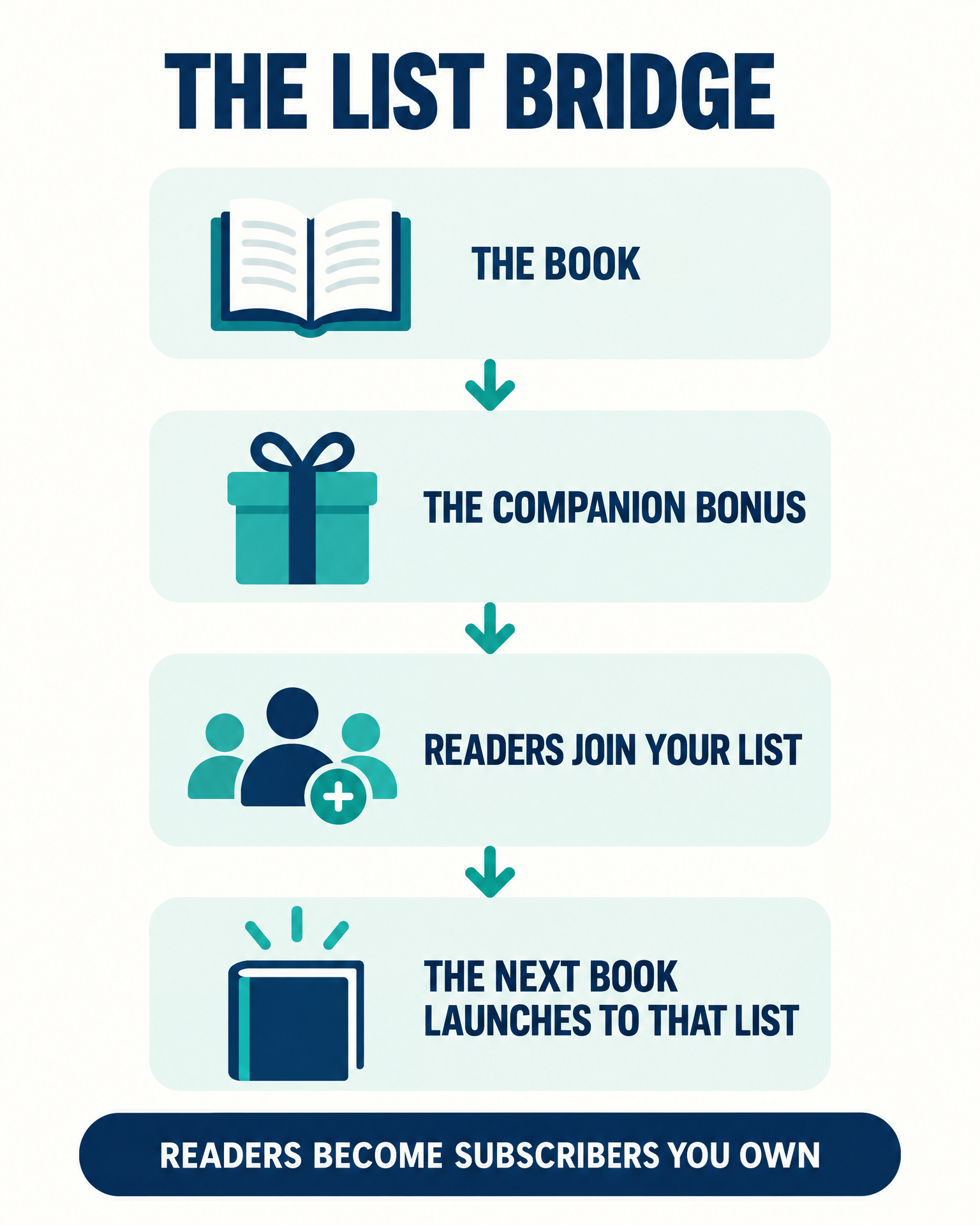
Half two: connect the book to your list. The book includes a companion bonus, something genuinely useful that goes beyond the pages. The reader claims it by joining your email list. This is the List Bridge, and it’s what moves a reader from Amazon’s customer base to yours.
The “snowball” part is what happens next. Each book launches to the list the previous book built, so the second launch starts ahead of the first.
How to Do It: From Pain to Published Book
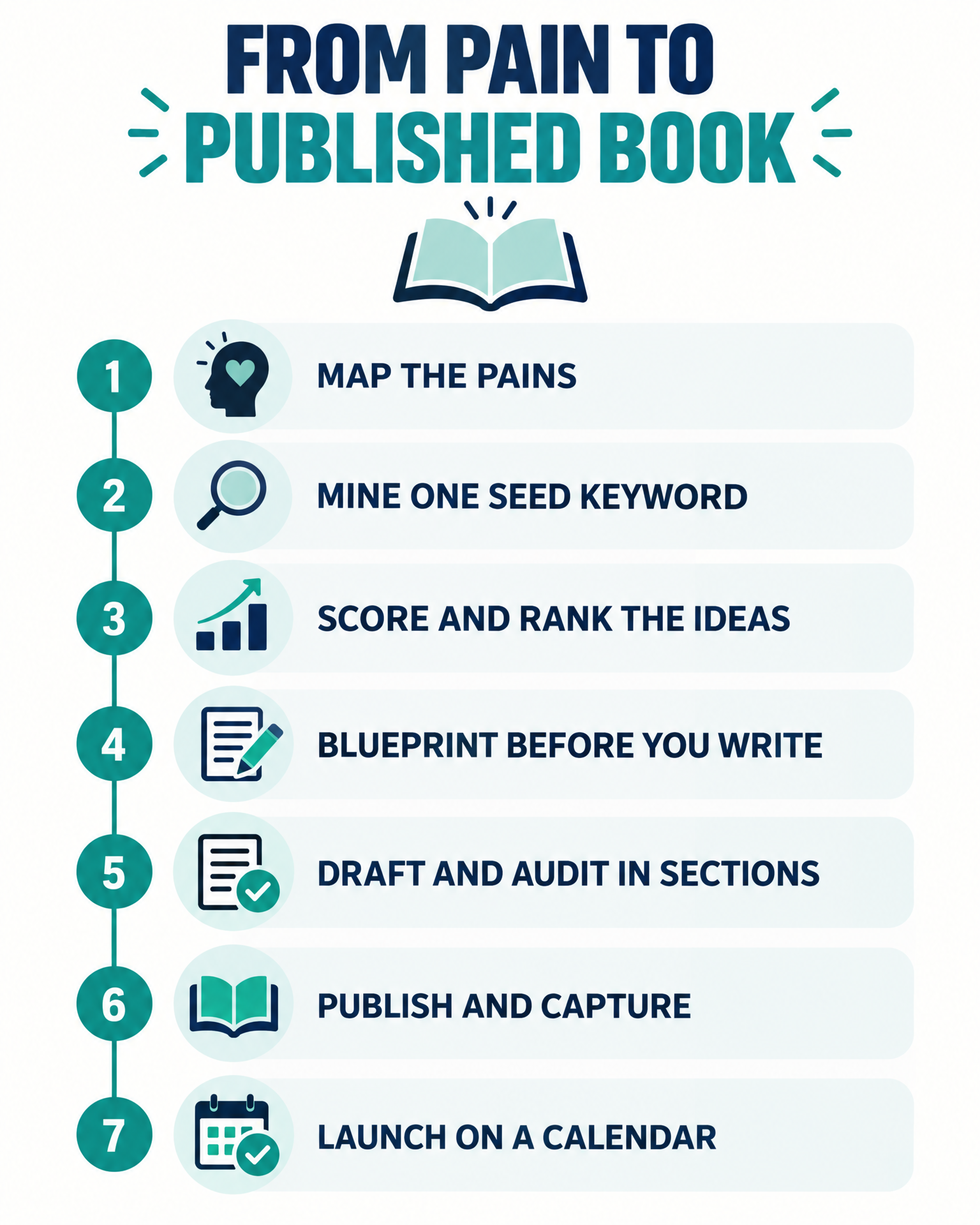
Here’s the practical sequence, whether you do it by hand or with a system.
Map the pains. List the problems your potential readers face, in their words, not industry jargon.
Mine one seed keyword. Expand it into a subtopic bank so you can see what people actually ask.
Score and rank the ideas. Judge each by how painful and how unmet the problem is. Commit to one winner.
Blueprint before you write. Outline the book and its companion bonus together, so the bonus is designed in from the start.
Draft and audit in sections. Write one section at a time using a fixed set of prompts, then check each section before moving on.
Publish and capture. Write the Amazon listing copy and keywords, and build the List Bridge so readers can join your list.
Launch on a calendar. Plan 30 days of launch activity and line up the next book.
You can absolutely run this yourself with a spreadsheet and patience. If you’d rather not assemble the process from scratch, The Book Snowball turns these seven steps into nine modules, each with a video lesson, a prompt set, a deliverable template, a review checklist, and a worked example followed end to end. It’s built for people fitting this around a full-time job.
What Results to Expect (and What Not To)
Let me be direct about my own record first. Between 2021 and 2024, I generated $600,000 in attributed affiliate sales while holding a full-time job. That figure is attributed sales, not personal income, and it comes from affiliate marketing, not book royalties. I’m not promising you book sales numbers, and nobody honest can. Your results depend on your topic, your execution, and your launch.
What the system is built to deliver is concrete:
- A ranked list of book ideas scored on real reader pain, and one committed winner, instead of a topic picked on a hunch.
- A blueprint for the book and its companion bonus, completed before you write a word of the manuscript.
- A drafted and audited manuscript, built one section at a time with a fixed prompt stack.
- Amazon listing copy and keywords, plus a List Bridge that gives readers a reason to join your list.
- A 30-day launch calendar and a series pipeline, so book two launches to the list book one built.
Before: a book idea chosen by gut, and buyers who disappear after checkout. After: a book chosen by evidence, with a built-in path from reader to subscriber. The course is 2 hours and 31 minutes of video across nine modules, and you need only an AI chat account (such as ChatGPT) and a Kindle Direct Publishing account.
The One Idea to Take With You
A book builds a list only when it’s designed to. The topic comes from a Pain Gap readers already search for, and the companion bonus gives them a reason to step off Amazon and onto your list. Everything else is execution.
If that logic makes sense to you, the next step is to see how the full system fits together. Take a look at what’s inside The Book Snowball at https://snowballaffiliate.com/course/the-book-snowball/: the nine modules, the worked examples, and the founding price of $47 (it moves to $97 afterward). If you’re curious how a book idea gets scored and ranked before you write anything, that’s the part to look at first.
Frequently Asked Questions
Can I build an email list with a book if I don’t have a list yet?
Yes. The Book Snowball is built for people with a small email list or none. The List Bridge, the companion bonus readers claim by joining your list, is how the first subscribers arrive.
Do I need to be an experienced author?
No author background is required. The course walks through choosing the topic, blueprinting, drafting and auditing the manuscript section by section, and writing your Amazon listing.
What do I need to get started, and what does it cost?
You need an AI chat account (such as ChatGPT) and a Kindle Direct Publishing account. The Book Snowball’s founding price is $47, rising to $97 later.