

Twelve browser tabs open right now. Maybe more. Three webinars watched, notebook half-filled with screenshots, and a forum thread from last night still glowing in your recent history because you couldn’t stop reading strangers ask the exact question keeping you up: does a structured system actually move an affiliate blog toward revenue faster — or is this just polished packaging around advice you’ve already heard a hundred times?
That question isn’t really one question. It’s two, wearing the same coat. The first is practical — what do you actually get inside each program, module by module? The second is quieter, more personal — what stage of blogger are you right now, today, and does the system in front of you match the actual problem sitting on your desk, or the problem you wish you had?
This piece exists to sit with both of those questions honestly. Two systems keep surfacing in the same conversations among affiliate marketers trying to figure out “how do I actually make this blog work”: Snowball Affiliate, a 9-module sequence-first system built for beginners and stalled niche bloggers, and Blog Growth Engine by Adam Enfroy, a 10-module scaling framework built for intermediate bloggers ready to stop treating their blog like a hobby and start running it like a business.
Neither wins outright. They were built to solve different problems, at different altitudes, for different versions of you. What matters here is figuring out which altitude you’re actually flying at — not which sales page has the better testimonials.
Table of Contents
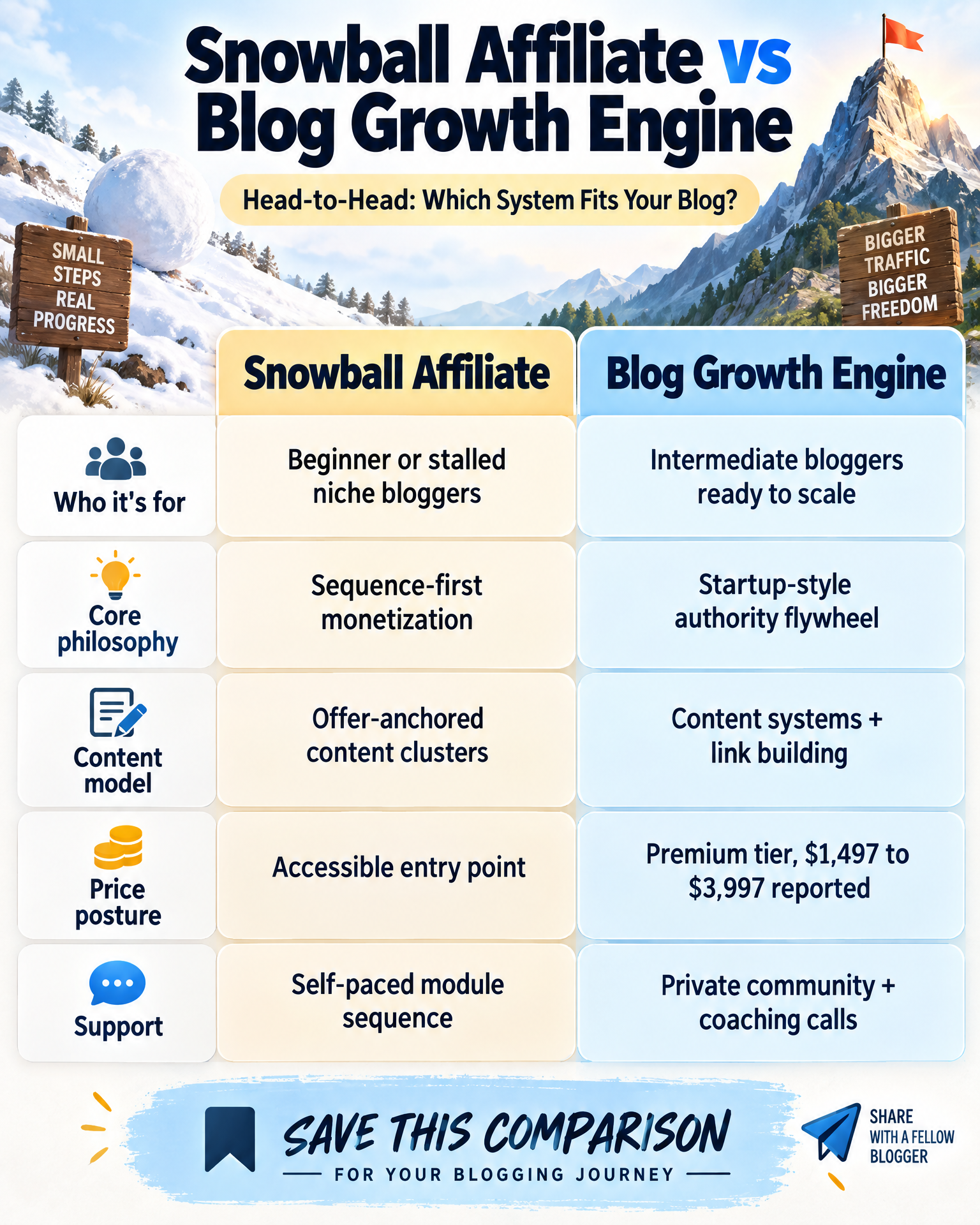
At a Glance: Head-to-Head Comparison
| Who it’s for | Beginner or stalled niche affiliate bloggers with little to no traffic or conversions | Intermediate bloggers with existing traffic/content ready to scale into a business |
|---|---|---|
| Content model | Offer-anchored content clusters built around a single buyer decision journey | Broad content operation: keyword-monetization mapping, content creation at scale, link building, multi-stream monetization |
| Pricing posture | Positioned as an accessible entry system for stalled or new bloggers (verify current pricing before purchase) | Premium tier positioning, reported in the $1,497–$3,997 range depending on tier (pricing varies — verify directly with the seller) |
| Support structure | Structured module sequence designed for self-paced execution | Private community, coaching calls, and cohort-style accountability |
| Guarantee | Varies by current offer — confirm terms at checkout | 14-day action-based money-back guarantee reported by reviewers (confirm current terms) |
That’s the skeleton. Bare bones, no pulse yet.
One quick note before we dive in: if Project 24 — not Blog Growth Engine — is the other name on your shortlist, we’ve put those two side by side in our Snowball Affiliate vs Project 24 comparison. Let’s put some blood in it.
Philosophy Showdown: Sequence-First Monetization vs. the Scale-the-Blog Flywheel
Here’s the thing nobody puts on the sales page: every blogging system is really just a bet about where your bottleneck is hiding. Not what you need to do — what’s actually broken. Get that diagnosis wrong and no amount of modules will save you.
Snowball Affiliate’s Bet: Your Bottleneck Isn’t Traffic. It’s Sequence.
Snowball Affiliate opens with a sentence that stalled bloggers don’t love hearing, even though somewhere underneath the defensiveness, they already suspect it’s true: more content was never the fix. The order you’re doing things in is.
So the 9-module structure doesn’t start where you’d expect — no keyword research, no niche brainstorm. It starts with the Offer. Only after that does it move through Buyer Pain, Connected Content, Reader Journey, Buying Decision, and finally Expansion. That ordering is deliberate, almost stubborn about it. Instead of publishing and hoping a reader eventually feels persuaded enough to click, you build the entire site backward from the moment someone decides to buy — and every post either serves that moment or gets cut without sentiment.
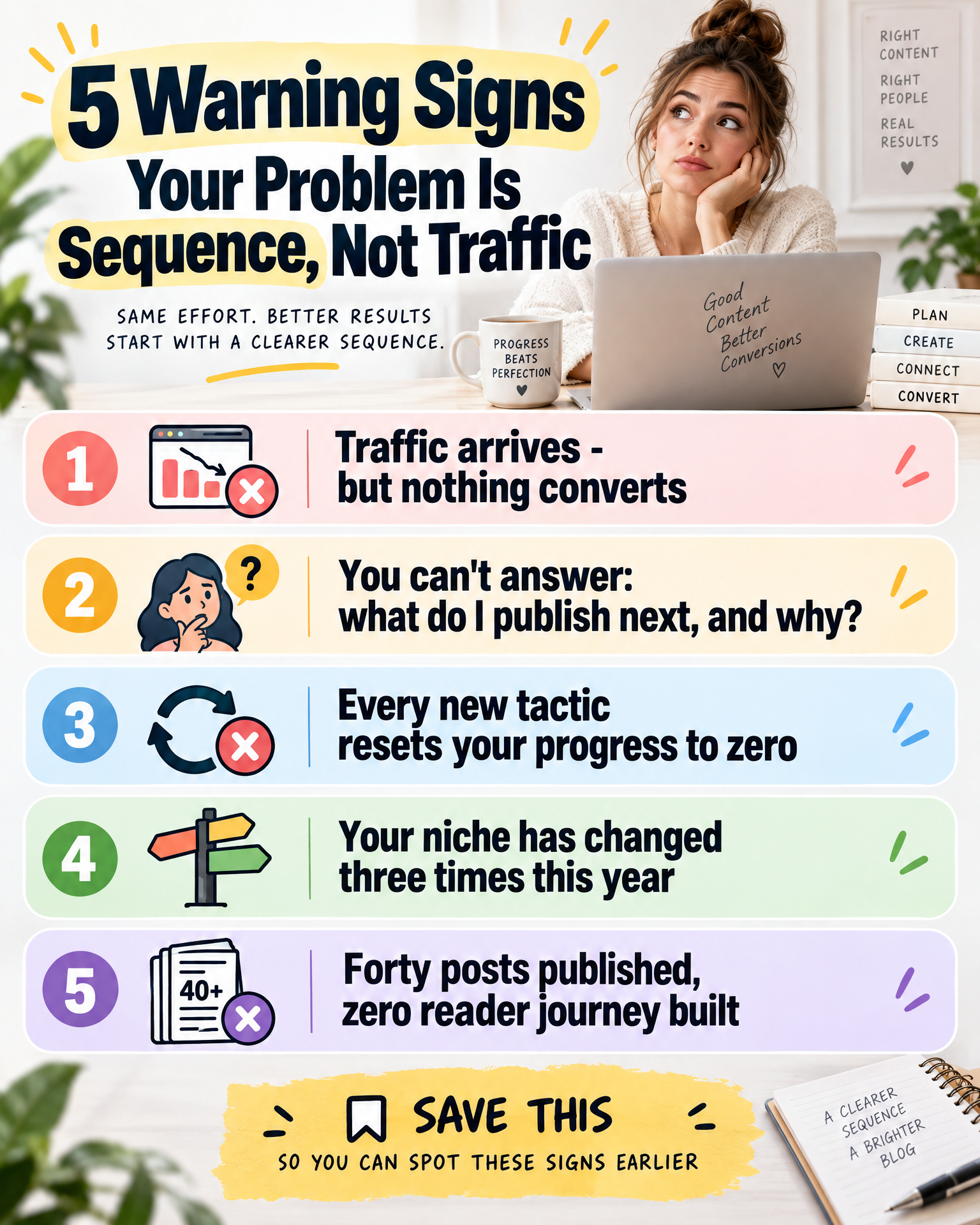
Strip away the course-speak and what you’re left with is a commercial-intent funnel wearing a curriculum’s clothing. It borrows its instincts from direct-response marketing, where the offer sits at the center like gravity and nothing gets published just because it’s “good content.” For someone staring at 40 published posts and a grand total of $12 in commissions, that reframing can land like someone finally flipping the light switch in a room they’ve been feeling their way through for a year.
If that description hits a little too close to home, read our breakdown of Why Your Affiliate Blog Gets Traffic but No Sales before you buy anything.
And here’s the part that matters more than the framework itself: stalled bloggers usually aren’t short on information. They’re drowning in it. What they actually need is permission to stop doing the fifteen things that don’t move the needle and commit to the one sequence that does. In that sense, Snowball Affiliate functions less like a course and more like an intervention — structural, yes, but psychological first.
Blog Growth Engine’s Bet: You’ve Got Traction. Now You Need a Machine.
Adam Enfroy’s Blog Growth Engine starts from a completely different place. Its assumption: you already have something — some traffic, some content, maybe a trickle of revenue — and the real issue is that you’re running a business with hobby-level infrastructure.
The 10 modules read less like a course outline and more like an operating manual for a startup: niche selection, mindset, “blogging like a startup,” decoding search intent, building a minimum viable website, keyword-monetization mapping, content systems at scale, link building, affiliate monetization, and scaling. Where Snowball Affiliate narrows everything down to one buyer’s single journey, Blog Growth Engine does the opposite — it widens the lens until you’re thinking simultaneously about domain authority, content velocity, backlink acquisition, and monetization diversification.
This is the flywheel logic: authority compounds, compounding authority earns links, links earn rankings, rankings earn traffic, and traffic finally earns you the option to monetize across affiliate, display, sponsorships, even your own products. Slower to get moving, no question — but once it’s spinning, it’s a much bigger engine than a single-offer funnel could ever be. It’s built for the blogger who’s already proven the niche has legs and now needs the operational muscle to make it 10x itself.
Which is also why the coaching calls and private community aren’t a nice-to-have bumped on at the end. They’re structural. Scaling means making real-time judgment calls — which links are worth building, which writer to trust with your voice, which monetization stream to test next — and static lessons alone can’t replace a room full of people wrestling with the same decisions in real time.
Who Snowball Affiliate Actually Suits
Cut through the sales copy and Snowball Affiliate is built for a specific kind of reader — you’ll probably recognize yourself in one of these:
- The stalled beginner. You’ve published. You’ve hit publish more times than you’d like to admit. It’s not converting, and somewhere in your gut you suspect the problem is structural — you just can’t name it yet.
- The overwhelmed researcher. You’ve watched enough free YouTube content to be dangerous and directionless in equal measure. What you need isn’t more options. It’s a fixed sequence and someone telling you to stop looking around.
- The single-niche affiliate blogger. You’re not building an empire. You want one site to work — reliably, predictably — before you even think about a second.
- The budget-conscious builder. You want to prove the model works before you commit real money to a premium, done-with-you scaling system.
If the sentence in your head sounds like “I genuinely don’t know what to publish next or why it would matter,” Snowball Affiliate answers that directly. It swaps ambiguity for a checklist rooted in buyer psychology, not another generic SEO playbook you’ve already half-memorized.
Who Blog Growth Engine Actually Suits
The Blog Growth Engine reader looks and sounds different:
- The proven-niche operator. Organic traffic is coming in. Some affiliate income is landing. You’ve got proof the niche converts — what you need now isn’t validation, it’s scale.
- The systems-builder. You’re ready to hire writers, build out a content calendar with real volume, and treat backlinks as an ongoing channel instead of something you tackle once and forget.
- The community-motivated learner. You know yourself well enough to admit you execute better with coaching calls and peer pressure than with a module list sitting quietly in a course dashboard.
- The bigger-bet investor. The premium price tag doesn’t scare you off, because you’re playing a 12–24 month game of compounding authority, not chasing a fast monetization win.
If your internal monologue sounds more like “I’ve got traction — I just don’t have an operating system to actually scale it,” Blog Growth Engine’s startup framework was built for exactly that transition.
The Honest Tradeoffs
No comparison worth trusting pretends either system is flawless. So here’s what each one actually costs you — beyond the price tag.
Snowball Affiliate’s Tradeoffs
What you gain: clarity you can act on today, a finite sequence instead of endless optionality, a lower cost of entry, and a psychological framework that forces commercial-intent thinking from module one instead of as an afterthought bolted on at the end.
What you risk: if you’re already past the beginner-stall stage, this sequence might feel like a smaller room than you need. Nine modules built around a single buyer journey aren’t going to teach you link building at scale, how to manage a content team, or how to run a multi-site portfolio. Bloggers who outgrow it fast may need a second system down the line — which isn’t really a flaw, just an honest boundary. It does one job extremely well. It was never trying to be your forever system.
Blog Growth Engine’s Tradeoffs
What you gain: a full operating framework, real community accountability, and coaching access that can save you from the kind of expensive trial-and-error mistakes people make when they try to figure out link building and scaling alone.
What you risk: the price. Reported tiers running from roughly $1,497 to $3,997 mean this isn’t an impulse click — it’s a business decision, and pricing shifts by tier and by current offer, so verify before you assume anything. It’s also a poor fit if your niche isn’t validated yet — pouring a startup-scaling framework into an unproven offer just means amplifying effort in a direction that might be wrong. And with 10 modules spanning mindset all the way through scaling, the time investment to actually implement everything is real. This isn’t a weekend system.
Neither tradeoff disqualifies anything. They’re just facts you deserve to know before you swipe your card. The real question was never “which system has zero downsides” — neither does — it’s “which downside can I actually live with, given where I’m standing right now.”
How to Decide: A Self-Diagnosis Framework
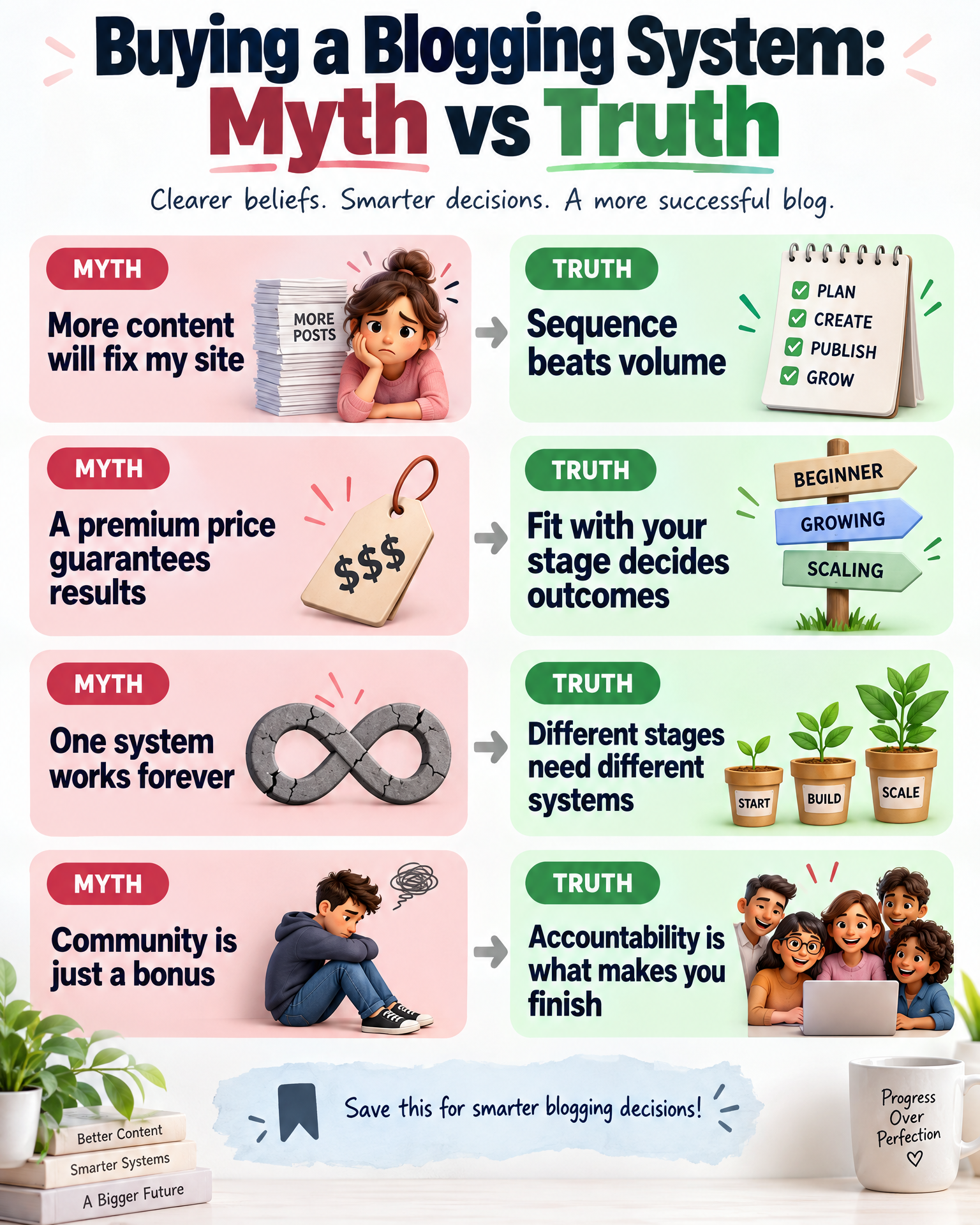
Before you check out on either page, sit with these questions for a minute. Answer them honestly — your answers will predict your outcome more accurately than any comparison chart ever could.
1. Do I have an offer and a defined buyer, or am I still guessing? If you can’t name the specific product, the buyer’s exact pain, and the buying decision your content is supposed to be steering toward — that’s a sequencing problem. Lean Snowball Affiliate.
2. Do I have existing traffic or revenue that needs multiplying, not creating from scratch? If you’re past zero and the real question is “how do I take what’s already working and make it 3-10x bigger” — that’s a scaling problem. Lean Blog Growth Engine.
3. What’s my actual budget tolerance, not my hoped-for one? Premium scaling systems carry premium price tags — we’re talking well into four figures. If that stretches your cash flow past comfort, a lower-cost, sequence-first entry point is probably the more sustainable place to start.
4. Do I learn better from a fixed checklist, or from community and coaching? Some people execute best completely alone, sequence in hand, no distractions. Others need the social pull of live calls and peer accountability to actually finish anything. Be honest about which one you are — it’ll decide whether you finish either program at all.
5. Am I trying to fix one broken site, or build something bigger than a site? Fixing one site with one offer, with precision, is a fundamentally different goal than building an authority engine meant to support a team, a portfolio, multiple income streams. Naming which one you actually want narrows this decision fast.
If most of your answers land on “guessing” and “one broken site” — start with the sequence. If they land on “existing traction” and “ready to build a team” — the flywheel framework was built for exactly where you’re standing.
Questions People Keep Asking
I don’t even have a website yet — is Snowball Affiliate still for me? It’s built with stalled and beginner niche bloggers in mind, and because it starts from the offer rather than generic setup steps, it tends to suit people who are pre-revenue or barely making anything and need a monetization-first structure rather than a broad “how to blog” curriculum.
I’m just starting out — is Blog Growth Engine worth the price at this stage? Reviewers generally point toward intermediate bloggers who already have traffic, not brand-new sites. The niche selection, MVP website, and scaling modules all assume some existing traction to work with — running a scaling curriculum against a zero-traffic site often just means paying premium tuition for lessons you’re not ready to use yet.
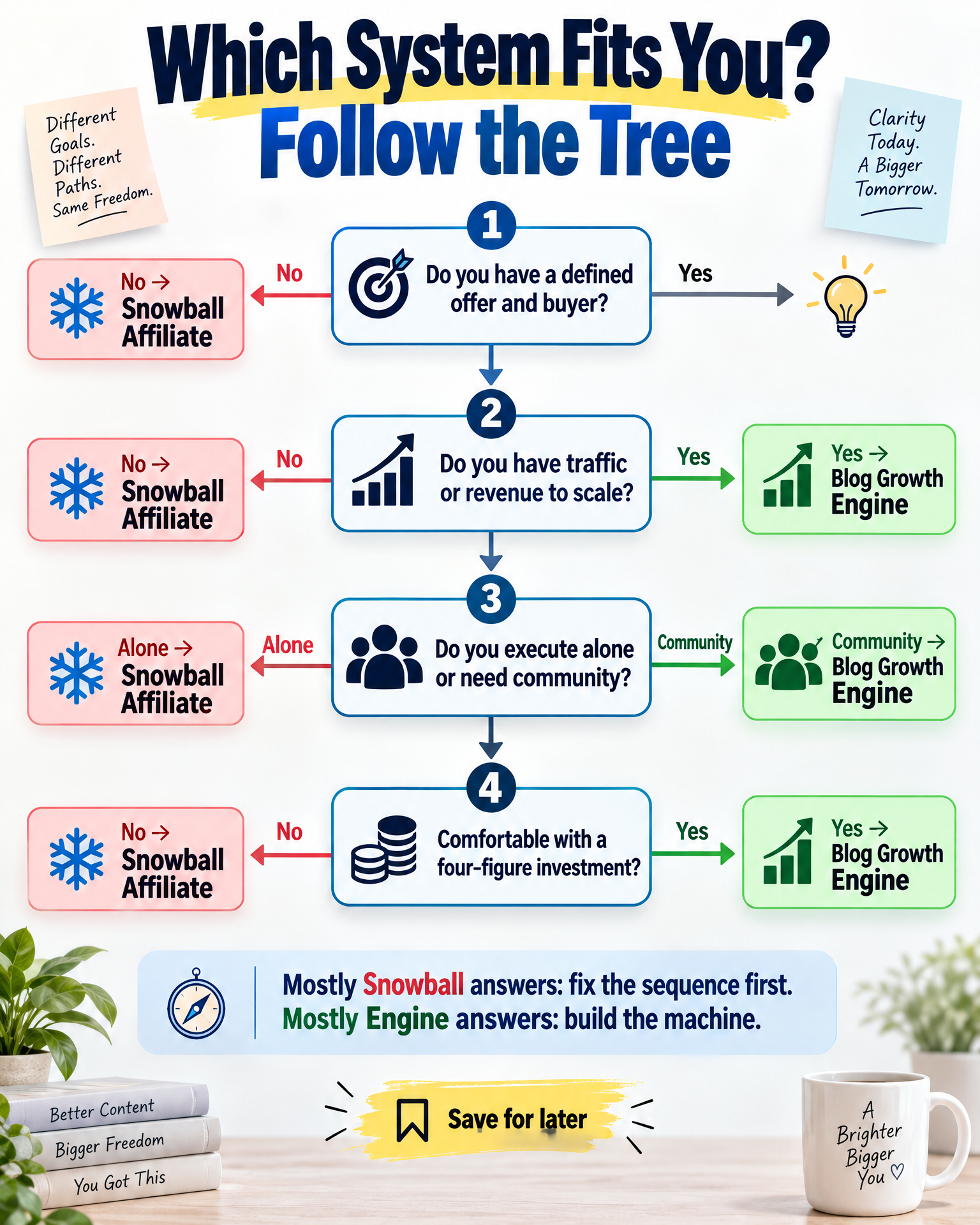
Will either one actually guarantee I make money? No education system can honestly promise that, and you shouldn’t judge either one based on guaranteed-results marketing. What you can evaluate is whether the structure matches the bottleneck you actually have — that’s a far more reliable predictor of what happens next than any promise on a sales page.
Okay but real talk — how does the pricing actually compare? Blog Growth Engine has been reported across tiers running roughly $1,497 to $3,997, putting it firmly in premium territory. Snowball Affiliate is generally positioned as the more accessible entry point. Pricing on both shifts often, so check the actual checkout page before trusting any number here — including this one.
Can I get my money back if it’s not for me? Reviewers have reported a 14-day action-based guarantee tied to Blog Growth Engine — usually requiring proof you actually did the action steps, not a no-questions-asked refund. Snowball Affiliate’s terms shift depending on the current offer. Confirm the exact conditions before you buy either.
Could I realistically use both at some point? Plenty of bloggers do exactly that — run Snowball Affiliate first to fix a stalled site’s conversion structure, then move into Blog Growth Engine once traffic and revenue are actually established. Sequencing your education the same way you’d sequence your content isn’t a workaround. It’s just smart ordering.
Which one actually helps more with SEO? Both touch SEO, just from opposite directions. Snowball Affiliate channels SEO through its “Connected Content” and “Reader Journey” modules, all pointed at a buyer’s decision path. Blog Growth Engine treats SEO as a wider authority discipline through “decoding search intent” and link building. For the bigger picture of how the journey stages connect, see How TOFU, MOFU, and BOFU Content Fit Together. Where you already stand with SEO should decide which angle actually helps you right now.
Products / Tools / Resources Mentioned
- Snowball Affiliate — the 9-module sequence-first system (Offer, Buyer Pain, Connected Content, Reader Journey, Buying Decision, Expansion, plus supporting modules) built for beginner and stalled niche affiliate bloggers who need structure more than more content. For the full walkthrough, read our Snowball Affiliate Review.
- Blog Growth Engine by Adam Enfroy — the 10-module scaling course covering niche selection, mindset, blogging-as-a-startup thinking, search intent, minimum viable website builds, keyword-monetization mapping, content systems, link building, monetization, and scaling — plus private community access and live coaching calls. For our full breakdown, see our Blog Growth Engine Review.
- Before you buy either one — go check the official sales page directly for current pricing, current module breakdowns, and current refund terms. Both of these systems adjust pricing and structure over time, and this comparison — like any third-party breakdown — should guide your thinking, not replace the fine print on the actual checkout page.