

Two names keep surfacing in the same search results: Snowball Affiliate and Making Sense of Affiliate Marketing, Michelle Schroeder-Gardner’s course. They get compared constantly — and the comparison usually misses the point.
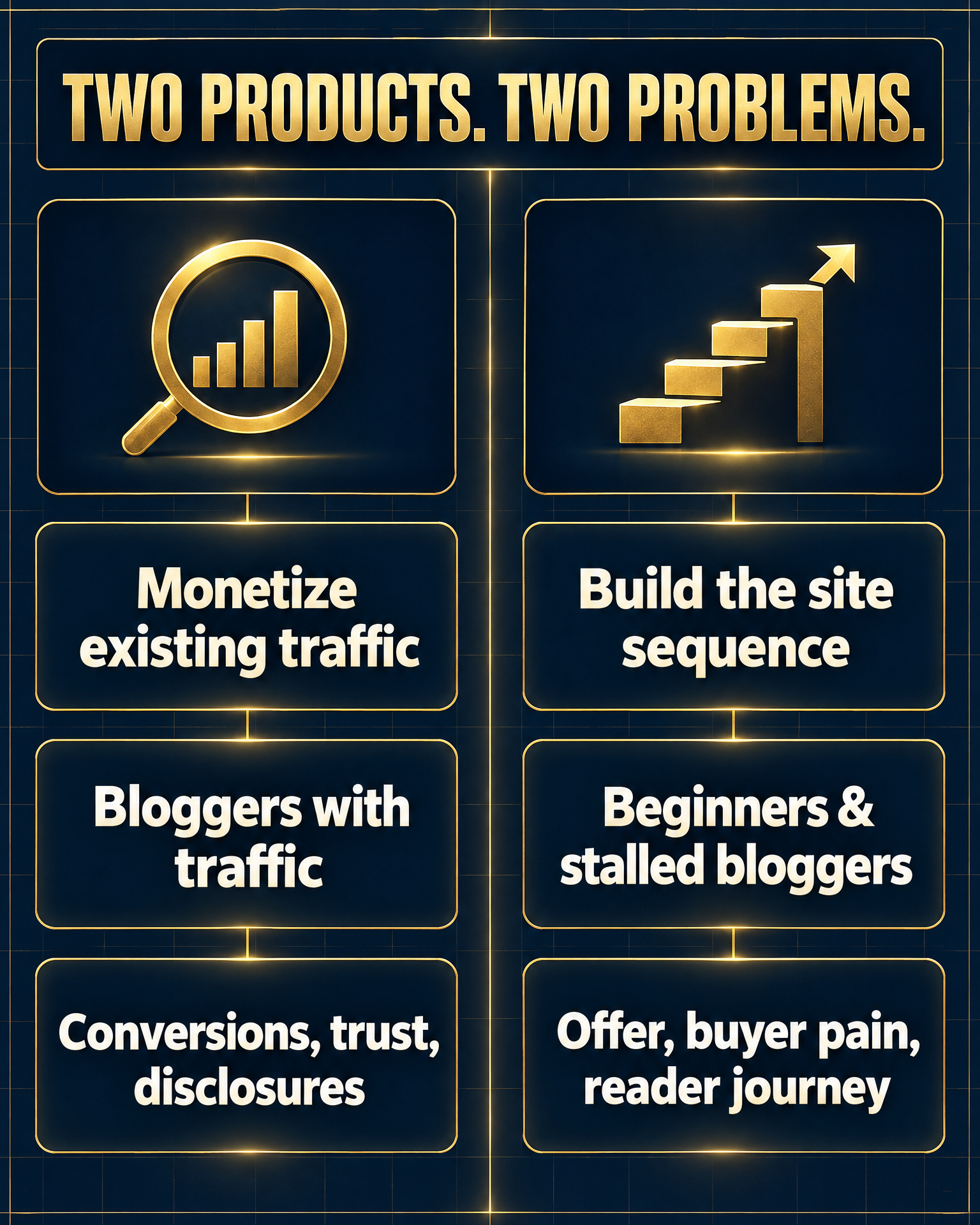
One is a complete affiliate-site sequence system for beginners and stalled bloggers. The other is monetization training for bloggers who already have traffic. Buy the wrong one for your situation and you don’t just waste money — you waste months. This page is a fit-based decision guide: name your actual problem first, then pick the product built to solve it.
Table of Contents
1. Two Readers, Two Very Different Problems
Nobody tells you this before you pull out your credit card for a course: “which one is better” is the wrong question to be asking.
There’s no such thing as universal “better.” There’s only “better for the specific mess you’re currently standing in.” And most people staring at Snowball Affiliate next to Making Sense of Affiliate Marketing, tab open in each window, haven’t actually paused to name what that mess is.
So let’s name two readers. Picture them for a second.
Reader one has a blog. It gets traffic — not huge, maybe, but real. Consistent. People show up. She’s had affiliate links scattered through her posts for months now, and almost nothing converts. Her problem is monetization, plain and simple. She needs to learn how to pick smarter products, build actual trust with the people already reading her, place links where eyes naturally land, and get them to click — then buy.
Reader two doesn’t have that problem. Not yet. Because reader two doesn’t have a working site system at all. Sure, there’s a blog — technically. But it’s a pile of disconnected posts with no thread pulling them together, no path from “stranger lands on page” to “stranger hands over money.” His problem isn’t a weak conversion rate. His problem is there’s no journey for anyone to convert along in the first place.
These are not the same problem. They never were. And they don’t share a solution. One course was built for reader one. The other was built for reader two. Mix them up, and you don’t just waste money — you waste months you won’t get back.
Let’s take each one seriously, on its own terms.
2. What Making Sense of Affiliate Marketing Actually Is
Making Sense of Affiliate Marketing is a course by Michelle Schroeder-Gardner, the woman behind the blog Making Sense of Cents. It’s squarely a monetization course. Not a “build a blog” course. Not an SEO course. Not a traffic course. Monetization, full stop.
Structurally, it reportedly runs 6 modules and 30+ lessons, plus worksheets and a handful of bonuses. The one people mention most is a list of 80+ affiliate programs, along with some Pinterest and traffic-adjacent extras thrown in. There’s also a private Facebook community that comes bundled with enrollment.
Delivery is text-based — and this matters more than it sounds like it should. Reportedly there’s no video instruction here. It’s hosted on Teachable, and you’re working through written lessons and worksheets instead of watching someone narrate over their screen. If you absorb information better by reading and doing than by watching someone else do it, that’s a genuine plus. If you need to see it demonstrated to make it click, weigh that carefully before buying.
Content-wise, it covers what affiliate marketing actually is, how to choose products that fit your audience instead of just chasing commission rates, how to lift conversions, how to build reader trust, the disclosure rules you’re legally supposed to follow, affiliate link management, and promotion strategy.
On pricing — multiple third-party reviews land on $197 as a one-time payment, with a two-payment option also on the table. At least one more recent review cites $236.40 one-time, or two payments of $126. Course pricing shifts without warning, so treat every number here — ours included — as a reason to go verify current pricing yourself, not as gospel carved in stone.
There’s reportedly a 30-day money-back guarantee, and there’s a catch worth knowing about before you assume it’s frictionless: some reviews note you may need to show you actually worked through the material and took action to qualify for a refund. Go check the current policy directly. Guarantee terms are exactly the kind of fine print that gets quietly rewritten.
Now, here’s the part that actually matters for this comparison — the thread running through nearly every independent, third-party review of this course: it assumes you already have a blog, and that blog already has traffic. It doesn’t teach site-building. It doesn’t teach content architecture. It doesn’t teach SEO or how to get visitors in the door in the first place. That’s not a hidden flaw buried on page four of some review — it’s close to the course’s own positioning, aimed squarely at “bloggers who already have traffic.” If that’s you, this was built with you in mind. If it isn’t you yet, the course spends exactly zero time on the thing you need solved first.
3. What Snowball Affiliate Actually Is
Snowball Affiliate is a different animal entirely. It isn’t monetization training bolted onto an existing site. It’s a complete affiliate-site sequence — an order-of-operations system for building the very thing that eventually needs monetizing.
The sequence runs in a specific order, and honestly, the order is the whole point:
Offer first. Before a single word gets written, you figure out what you’re actually selling access to — the product or affiliate offer the entire site exists to support.
Buyer pain second. You map out what the person who’d realistically buy that offer is actually struggling with, so your content speaks to a real decision instead of some generic topic nobody’s losing sleep over.
Connected content third. Instead of scattered blog posts quietly competing with each other for the same scraps of attention, content gets built to link together — on purpose, not by accident.
A real reader journey fourth. This is the piece most stalled blogs are missing entirely. A path that walks someone from “just found this site” all the way to “ready to decide.”
A buying decision fifth. The system is engineered to end at an actual decision point. Not just more content stacked on more content.
Expansion last. Only once that core sequence is proven to work do you scale it into more topics, more offers, more content.
This is built for a very particular reader: the beginner who hasn’t built anything substantial yet, or the stalled niche blogger sitting on a folder of posts with no idea what to build next. If you’ve ever finished writing a blog post and thought, “okay… now what?” — that’s the exact gap this fills.

For a fuller breakdown of what’s actually inside, the Snowball Affiliate Review covers the mechanics in more depth than we need to rehash here.
Worth knowing too — this isn’t the only system-style product circling this space. We’ve separately compared it in Snowball Affiliate vs Blog Growth Engine, and there’s a standalone Blog Growth Engine Review if that’s a name that’s crossed your radar too.
4. Side-by-Side Comparison
| Making Sense of Affiliate Marketing | Snowball Affiliate | |
|---|---|---|
| Core promise | Monetize existing blog traffic through affiliate links | Build a complete affiliate-site sequence from scratch |
| Who it’s for | Bloggers who already have traffic | Beginners or stalled niche bloggers with no working system |
| What it teaches | Product selection, conversions, trust, disclosures, link management, promotion | Offer selection, buyer pain mapping, connected content, reader journey, decision points, expansion |
| What it doesn’t teach | Site-building, content architecture, SEO, traffic generation | Not primarily a deep-dive monetization / conversion-copy course for sites that already have traffic |
| Delivery format | Text-based lessons and worksheets, hosted on Teachable, no video | Sequenced system / framework |
| Community | Private Facebook group included | Not the focus of this comparison — check the current offering |
| Price | Reportedly $197 one-time or two payments (one recent source: $236.40 one-time / 2 of $126) — verify current pricing | Verify current pricing directly |
The table looks tidy and simple. But the real story is hiding in rows two and three — that gap between them. One product is downstream of traffic already existing. The other is upstream of it, entirely.
5. The Diagnostic: Which Problem Do You Actually Have?
Forget the marketing copy for a minute. Answer these honestly — nobody’s grading you.
Do you have consistent traffic already? Not massive numbers, just real, repeatable visits from somewhere — search, Pinterest, social, an email list, doesn’t matter. If yes, keep reading this list. If no, monetization training isn’t your bottleneck yet, no matter how good it is.
Are you already publishing affiliate links, and they just… aren’t converting? People are seeing them, scrolling past them, moving on. That’s a monetization and trust problem — exactly the territory Making Sense of Affiliate Marketing was built to cover.
Or, when someone lands on your site, is there simply no next step for them at all? No obvious path from post to post. No natural pull toward a decision. Just isolated pages floating next to each other. That’s not a conversion problem. That’s a missing-system problem, and it feels different once you name it.
Do you have a blog at all — functioning, with actual published content? If your honest answer is “sort of, barely,” you’re standing closer to reader two from the intro than reader one. And a monetization course is going to feel like it’s speaking a foreign language compared to your actual day-to-day problem.
Is your issue “I don’t know what to write next,” rather than “I don’t know how to sell what I’ve already written”? That’s an order-of-operations problem. Not a conversion problem. Different animal entirely.
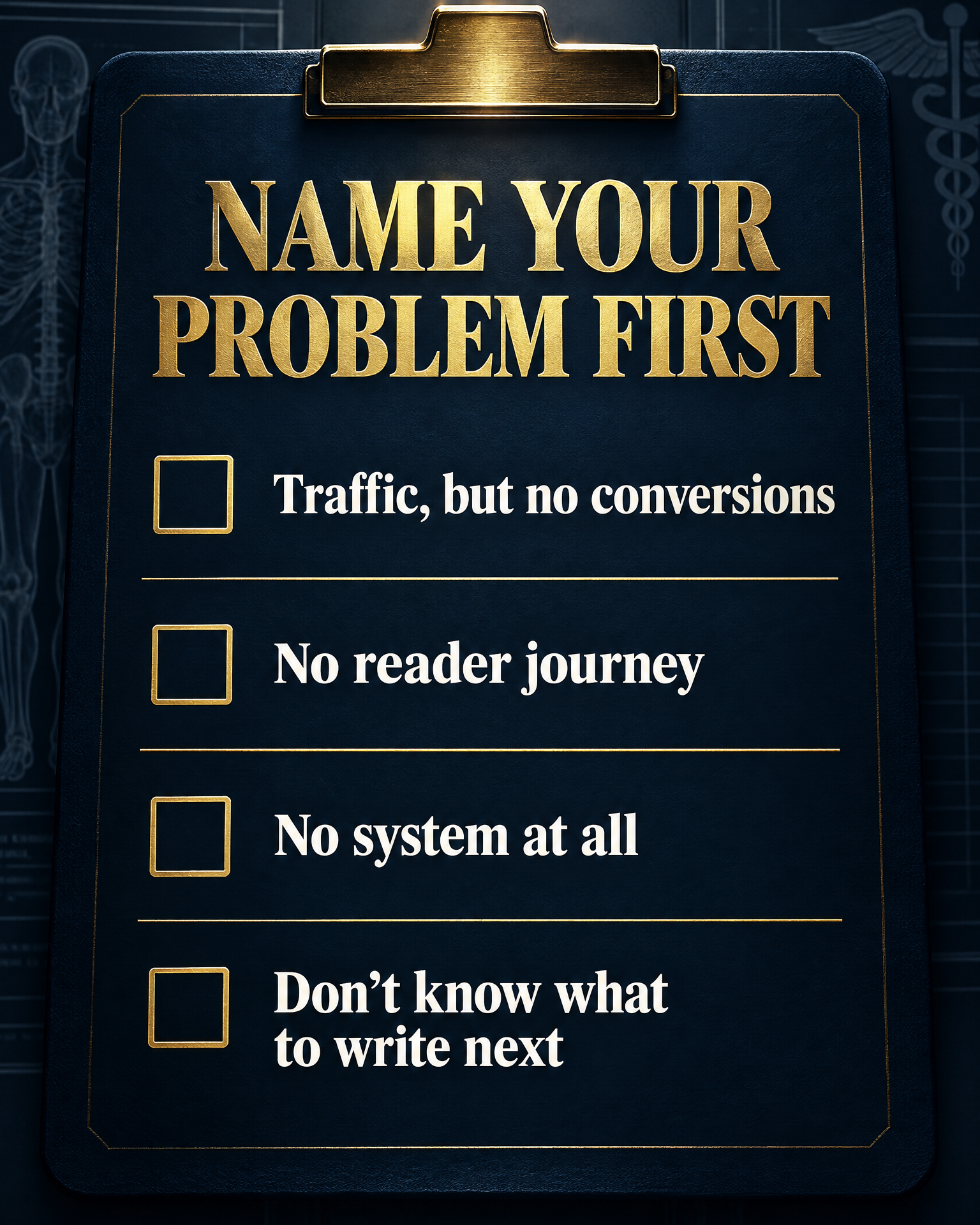
If your answers cluster around traffic-exists-but-doesn’t-convert, that’s a monetization gap. If they cluster around no-clear-path-or-system, that’s a sequence gap. Different diagnosis. Different purchase. Don’t let a sales page talk you out of your own honest answer.
6. Who Should Pick Which
Pick Making Sense of Affiliate Marketing if: you’ve got a blog with real, recurring traffic, you’re already running affiliate links, and the actual problem is that clicks and sales just aren’t happening at the rate they should. You don’t need help getting people to your site — you need help turning the people already standing there into buyers. That’s a genuinely different skill than site architecture, and this course was built around exactly that skill.
Pick Snowball Affiliate if: you’re starting from little or nothing, or you’ve got a stalled blog that’s been publishing without any real structure or destination. Your problem isn’t “my links don’t convert” — it’s “I don’t have a system that gets someone to a link in the first place.” Trying to optimize conversions on a site with no reader journey is like tuning an engine that isn’t bolted to the car yet.
Take neither, yet, if: you haven’t decided on a niche, don’t have an offer in mind, or don’t even have a domain live. Both of these are investment-stage products — they assume you’ve already made the “should I even do this” decision and landed on “how do I do this well.” Buying either one before you’ve settled basic direction just delays the real decision. It doesn’t make it for you.
That third option isn’t a cop-out, by the way. It’s honest. Plenty of people buy courses specifically to avoid deciding what their site is actually about — and no course on earth fixes that kind of avoidance.
7. Common Traps
Trap one: buying monetization training when your real problem is order-of-operations. This is the single most common mismatch we see, over and over. Someone with a stalled, structureless blog buys a course on picking better affiliate products and writing tighter disclosures — and nothing changes, because the course was never designed to fix “I have no reader journey.” It was designed to fix “my reader journey exists but leaks at the end.” Different leak. Different fix. No amount of studying the wrong lesson patches the right hole.
Understanding where your content actually sits in a reader’s journey — top, middle, or bottom of the funnel — makes this trap obvious the moment you see it clearly. If that concept still feels fuzzy, How TOFU, MOFU, and BOFU Content Fit Together on an Affiliate Site is genuinely worth reading before you buy either product.
Trap two: buying a full system when you’ve already solved the traffic problem. If you’ve got steady traffic and a working content structure, and your actual gap is that affiliate links underperform, a complete site-sequence system becomes redundant weight. You don’t need to rebuild your offer-to-content sequence from the ground up. You need sharper monetization mechanics layered on top of what’s already humming along.
Trap three: assuming price signals depth. A cheaper course isn’t automatically shallower. A pricier system isn’t automatically more complete. Match the product to the problem first, always. Price comparisons only mean something once you’ve confirmed you’re comparing two things solving the same problem — and as this whole page has been arguing, these two mostly aren’t.
8. FAQ
Can I use both?
In theory, yes — but in a specific order. Build the sequence and the traffic first. Then layer in dedicated monetization training once there’s actually something to monetize. Buy both at the same time, before a system exists, and the monetization lessons just sit there. Unused. Waiting for a reader journey that doesn’t exist yet.
Which one should I buy first?
If you’re genuinely unsure, default to whichever problem is actually blocking you today. No traffic, no structure? System first. Traffic exists, but conversions don’t? Monetization first. When you’re still on the fence, system-first is usually the safer bet — monetization training doesn’t have much to work with until a real reader journey exists to monetize.
Does Making Sense of Affiliate Marketing work if I don’t have traffic yet?
Reportedly, no — not well. That’s the recurring theme across third-party reviews: it assumes a blog with traffic already exists, and it doesn’t cover site-building, SEO, or getting visitors in the door. Buy it without traffic, and you’re paying for lessons you can’t actually apply for a while.
Is that 30-day guarantee on Making Sense of Affiliate Marketing as simple as it sounds?
Reportedly, there’s a condition attached — some reviews mention you may need to show you went through the material and applied it to qualify for a refund. Go check the current policy directly rather than assuming it’s a no-questions-asked situation.
9. Products, Tools & Resources
Making Sense of Affiliate Marketing — a text-based, Teachable-hosted monetization course by Michelle Schroeder-Gardner. 6 modules, 30+ lessons, worksheets, an 80+ affiliate programs bonus list, Pinterest and traffic-adjacent resources, plus a private Facebook community. Reportedly $197 one-time or two payments (one recent source cites $236.40 one-time / 2 payments of $126) — verify current pricing before you buy. Reportedly a 30-day guarantee with an action-taken condition attached — check the current policy directly. No affiliate link included here; search the course name directly if you want the official sales page.
Snowball Affiliate — a complete affiliate-site sequence system covering offer selection, buyer pain mapping, connected content, reader journey design, buying-decision structure, and expansion. Built for beginners and stalled niche bloggers who need an order-of-operations framework, not conversion-rate tactics. See the Snowball Affiliate Review for the full walkthrough.
Further reading on related products and concepts: